
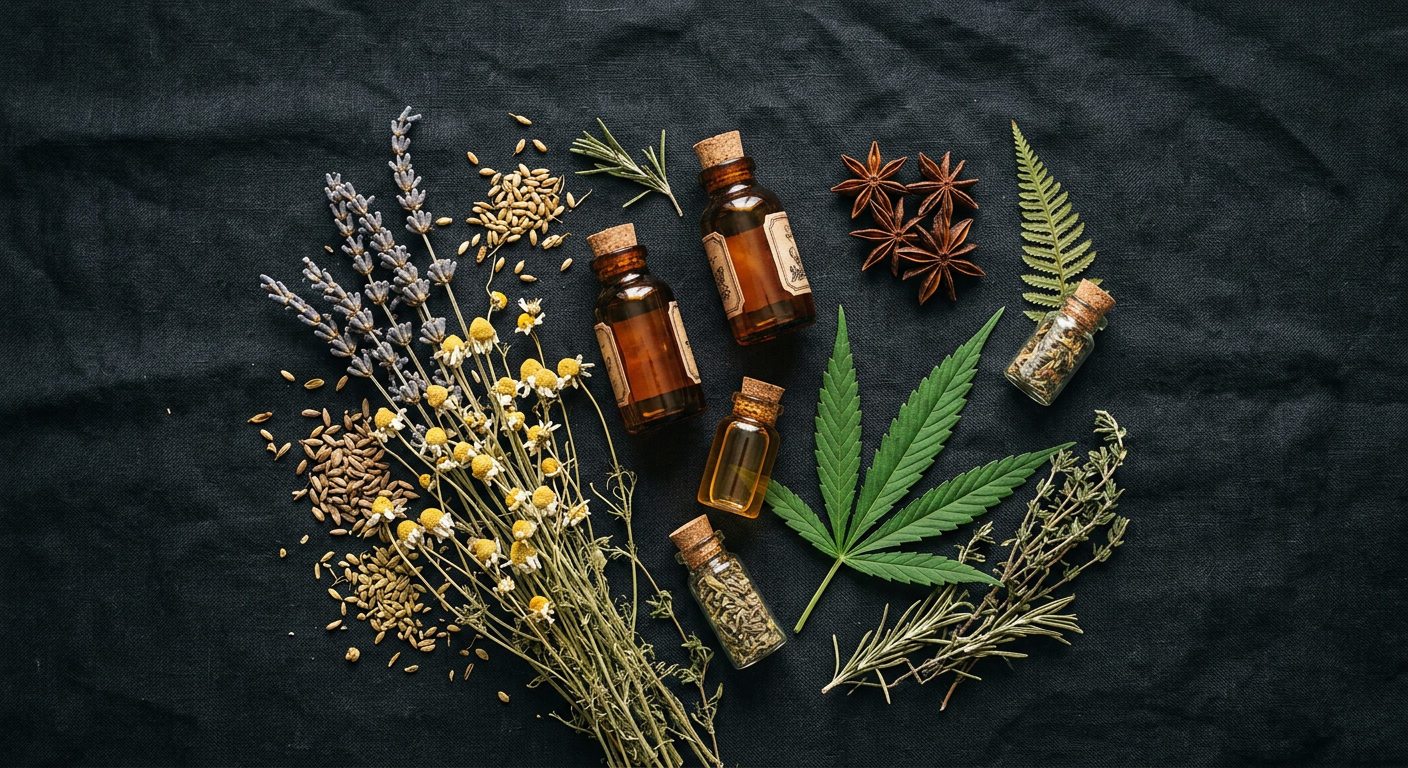
Key takeaway
Terpenes contribute to aroma, but neither their names nor their concentrations alone predict individual effects.
Terpenes are aromatic compounds present in cannabis and many other plants. They contribute to scent, but no one terpene describes an entire cultivar.
How terpenes contribute to aroma
Different combinations and proportions of volatile compounds help explain citrus, pine, herbal and other aromatic notes. Flower scent is not determined by one compound alone.
Why profiles vary
Genetics, cultivation, harvest timing, processing and storage can influence the aromatic profile of finished flower. One batch's measurements should not be assumed to represent every batch.
What terpene information cannot promise
Terpene content does not establish a guaranteed effect or medical benefit. Product-specific testing is more relevant than broad claims about cultivars.
Explore the terpene library
These linked articles cover individual terpene aromas, focused profiles and broader context. They are educational references, not predictions of effects.
Aroma guides
- Myrcene: earthy and herbal aroma
- Limonene: citrus peel and zest
- Caryophyllene: pepper and spice
- Linalool: floral and lavender-like notes
- Pinene: pine and resin
- Ocimene: herbal and fruit-like notes
- Terpinolene: herbal and floral complexity
Individual terpene profiles
- Linalool profile
- Myrcene profile
- Pinene profile
- Limonene profile
- Beta-ocimene profile
- Beta-caryophyllene profile
Broader terpene explainers
Further reading
Explore What Whole Flower Lets You See and Precision Cultivation, Explained.
This article is intended for legal-age audiences in markets where cannabis is permitted. It is for general education only, not medical advice. Product details, availability, and packaging can vary by province, retailer, and batch.