
Key takeaway
Myrcene is best understood as part of a cultivar’s aroma profile, not as a guaranteed experience or medical outcome.
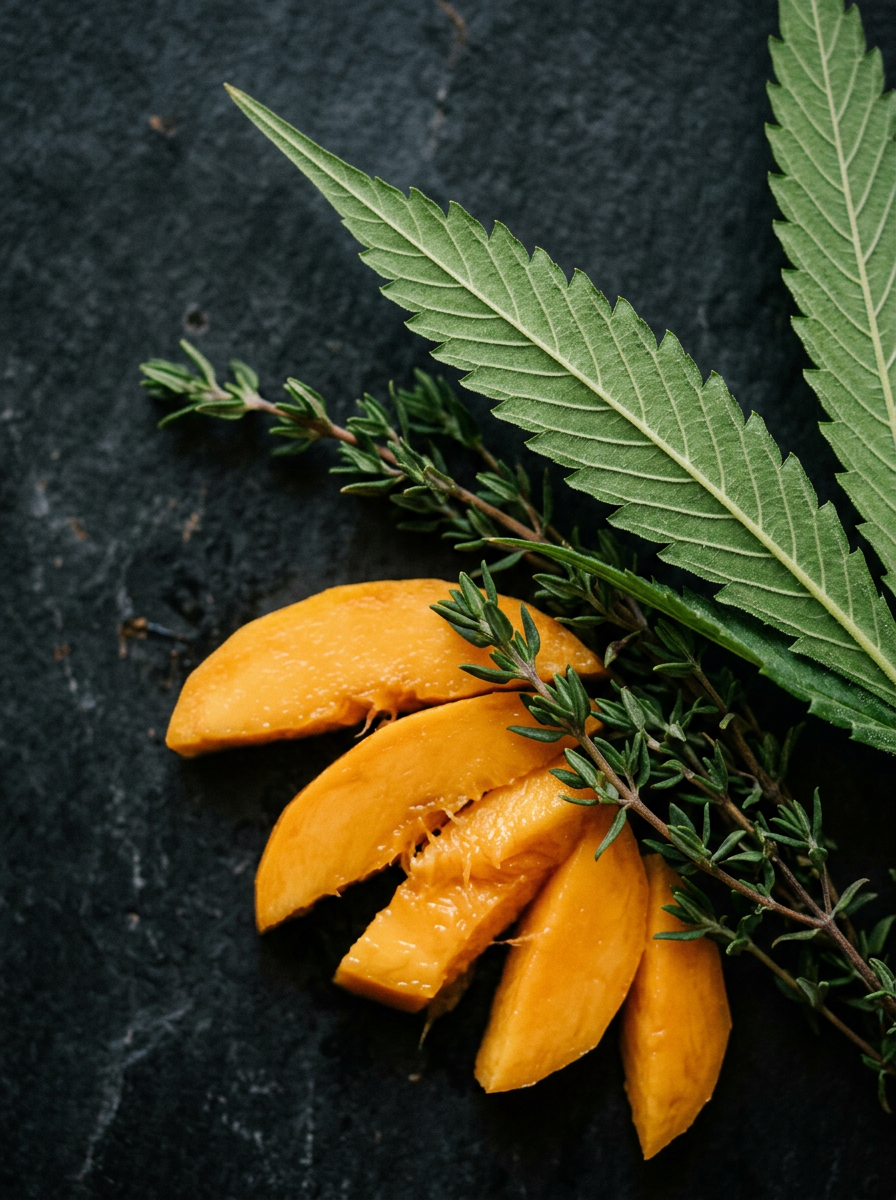
Quick answer: Myrcene is a cannabis terpene often discussed through aroma. In PURPLEFARM education, it should be described through sensory language such as earthy, herbal, lightly musky, and sometimes reminiscent of ripe fruit, not as a guaranteed effect or medical claim.
Myrcene helps give a cultivar part of its aromatic identity. It can appear as a dominant note, a supporting note, or one piece of a broader terpene profile that includes other compounds and batch-specific expression.
Why terpenes matter
Terpenes make cannabis easier to describe in a grounded way. Instead of reducing a product to THC alone, terpene language helps people talk about citrus, spice, pine, floral notes, fruit, fuel, earth, sweetness, and other aromas that shape cultivar identity.
For PURPLEFARM, that language is useful because it connects cultivation, genetics, quality, and retail education. It also supports better search visibility because people often look for specific terpene names, aroma families, and cultivar descriptions.
How to describe terpene expression responsibly
- Use aroma language first, such as citrus, pine, spice, fruit, floral, fuel, herbal, or earthy.
- Make room for batch variation and avoid presenting a terpene as a guaranteed experience.
- Connect terpenes to cultivar identity, not to medical claims.
- Use lab or batch data only when it is confirmed for the product being discussed.
- Help budtenders and legal-age consumers ask better questions at retail.
How Myrcene may show up in a cultivar
When Myrcene is part of a profile, it should be read with the full aromatic picture. A cultivar can carry myrcene while still leaning sweet, gassy, floral, tropical, herbal, or dessert-like depending on genetics, harvest timing, cure, and other terpene partners.
FAQ
Do terpenes determine the effect of cannabis?
No. Terpenes can contribute to aroma and product description, but they should not be treated as a simple formula for effect or medical outcome.
Why do two batches with similar terpenes smell different?
Aroma can vary because terpene ratios, minor compounds, cultivation conditions, harvest timing, curing, packaging, and age all influence the final profile.
How should retailers use terpene language?
Retailers can use terpene language to guide aroma discovery, explain cultivar differences, and help legal-age consumers compare products more thoughtfully.
Suggested related reading
- What Are Terpenes in Cannabis?
- Limonene in Cannabis: Citrus, Brightness, and Aromatic Lift
This article is intended for legal-age audiences in markets where cannabis is permitted. It is for general education only, not medical advice. Product details, availability, and packaging can vary by province, retailer, and batch.