
Key takeaway
Caryophyllene contributes to a cannabis flower's aroma but cannot independently predict effects or substitute for product-specific batch information.
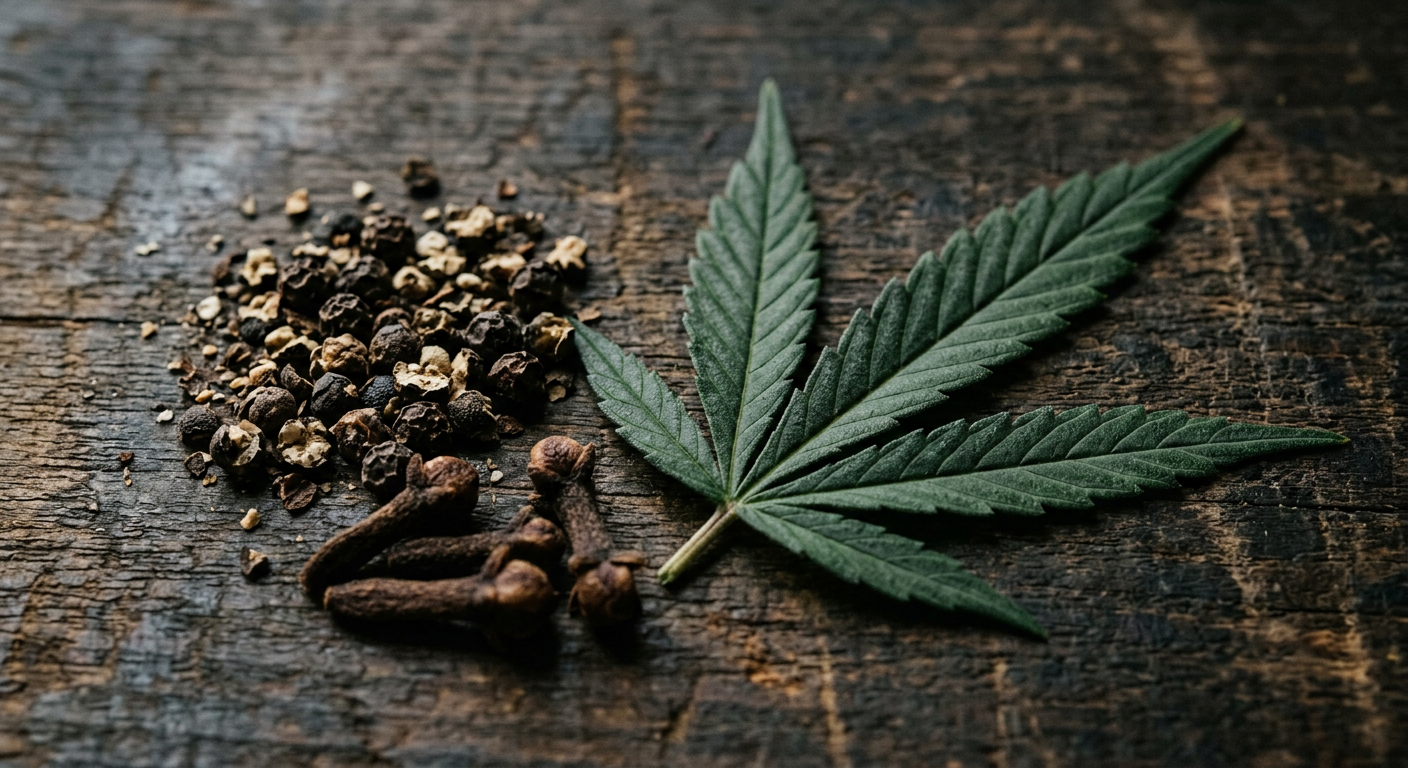
Caryophyllene is one of the aromatic compounds that may appear in cannabis flower. It is often associated with peppery, woody and warm-spice—descriptions of scent, not predictions about how a product will affect someone.
What caryophyllene smells like
Black pepper and clove-like comparisons can help describe the scent, but individual flower samples may bring other notes to the foreground. Aroma words are comparisons, and the same named compound can be perceived differently depending on its concentration and the other volatile substances present.
The full profile matters
Beta-caryophyllene is a sesquiterpene. Its presence in a chemical profile does not, by itself, tell a reader whether a finished batch smells strongly of pepper. Cannabis flower contains a mixture of terpenes and other aromatic compounds. No single entry on a laboratory sheet defines the entire experience of smelling that batch.
Why batch information matters
Genetics, cultivation, harvest timing, drying, curing and storage may affect the composition and preservation of flower aroma. The profile for one harvest should not be presented as the permanent specification of every product carrying the same cultivar name.
How to describe it responsibly
Research into this molecule should not be translated into medical promises about a cannabis product. When product-specific testing is available, use the values reported for that batch. Otherwise, keep aromatic language descriptive and qualified, without implying a medical outcome or guaranteed experience.
Further reading
For a focused reference, see Terpene Profile: Beta-Caryophyllene.
Explore What Are Terpenes in Cannabis? and A Is for Aromas for more context on comparing aromatic profiles.
This article is intended for legal-age audiences in markets where cannabis is permitted. It is for general education only, not medical advice. Product details, availability, and packaging can vary by province, retailer, and batch.